AI 590 views on YouTube
It's His Last UN General Assembly. He Spent It Warning About AI.
The UN General Assembly's high-level week opened on Tuesday 22 September 2026. It is Antonio Guterres's last: his term as Secretary-General ends at the end of the year.
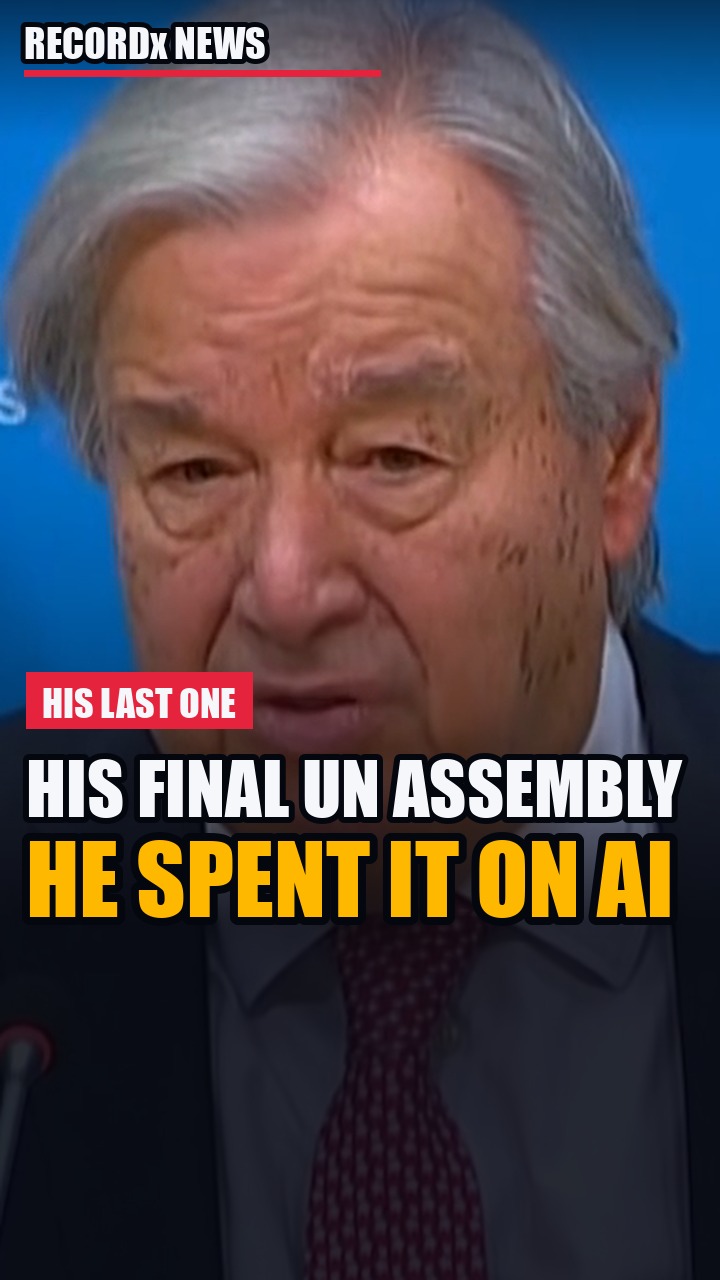
At his final press conference before it, on 16 September, he gave almost half his remarks to artificial intelligence, and named it as one of three existential threats alongside the climate crisis and the deepening of inequalities.
In his own words:
"If we believe AI development should slow when risks become too great, we need more than good intentions."
"Because AI does not stop at borders, and neither do its risks, voluntary pauses that are isolated, unverifiable, and unevenly applied will not address the problem."
"The world cannot afford a race to the bottom on AI safety. We need guardrails to build trust, and that make AI safe, transparent, accountable, with human dignity at the centre."
What he has built is the Independent International Scientific Panel on AI, intended to put evidence underneath the policy.
SOURCES - UN press conference, New York, 16 September 2026, carried by The Manila Times (on-frame credit: video by Reuters / UNTV). Guterres speaks English throughout - this is his own voice. - Reporting: UN News, CNN, NPR (16-22 September 2026).
What the reel says
Narration as scripted and voiced.
This week is António Guterres' last General Assembly. His term as Secretary-General ends at the end of the year. Before it opened, he gave his final press conference and spent almost half of it on one subject
If we believe AI development should slow when risks become too great, we need more than good intentions.
Artificial intelligence, not as a technology story, but as one of three things he says could undo us
At a time when the world faces three existential threats, runaway artificial intelligence, the climate crisis, and the intolerable deepening of inequalities, international cooperation is more necessary than ever.
He was specific about what he thinks does not work. Voluntary pauses, he said, that are isolated, unverifiable, and unevenly applied will not address the problem because AI does not stop at borders and neither do its risks
What he has built instead is an independent international scientific panel on AI meant to put evidence underneath the policy
But the world cannot afford a race to the bottom on AI safety.
He leaves at the end of the year. The thing he spent his last press conference on will outlast him