Business 1,082 views on YouTube
They Called It Economic D-Day. Oil Went Down.
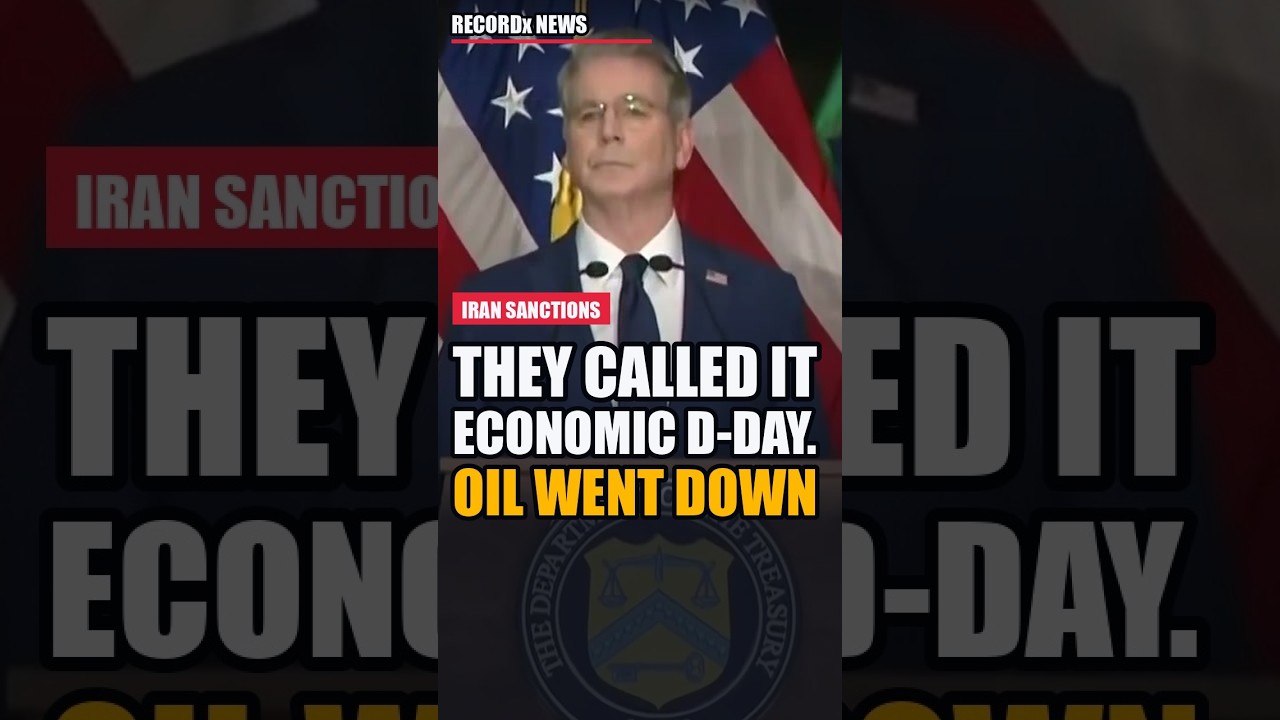
On Monday the US Treasury announced Operation Economic Outcast and called it an economic D-Day for Iran. On Tuesday the oil market returned a different verdict.
Brent fell more than 3% to about $89 a barrel. West Texas Intermediate fell about the same, closing down 3.39% just above $82 - its largest percentage drop since 4 August, and a one-week low.
CME Group's own market wrap put it plainly: "New US sanctions on Iran landed Monday, but crude oil barely reacted... Traders appear to be treating the sanctions as more of an economic pressure campaign than an immediate threat to oil supply, since sanctions don't destroy oil production."
The announcement named five sectors and more than sixty entities, but stopped short of immediate secondary sanctions on the countries actually sustaining the trade. Beijing rejected the measures, warning they would only intensify tensions. Tehran's economy minister went on state television to say Iran was fully prepared to withstand more of them.
The reporting
Sequel to gu-5x3C-sbY (Operation Economic Outcast). That reel argued the sanctions were a warning, not an act: five sectors, sixty names, zero Chinese banks. This one is the receipt — within a day the oil market priced them exactly that way.
How this was verified — the rest of the fact sheet
7. CLOSE fn2_7 (~15s)
The dollar is the weapon. On Tuesday the people who trade the thing it was aimed at told you how hard they thought it had been swung. Crude closed lower.
References
Reporting drawn from CME Group daily market wrap · 25 Aug 2026; Schwab Network · 25 Aug 2026; C-SPAN (Treasury news conference · 24 Aug 2026)
What the reel says
Narration as scripted and voiced.
You described this as an economic D-Day,
That was Monday. The words were the strongest an American treasury secretary has used about Iran. And within a day, the oil market returned a verdict that did not match them at all.
When a country that supplies oil is threatened, crude usually goes up. On Tuesday, Brent fell more than 3 % to about $89. West Texas fell about the same to near $82, a one -week low.
New U.S. sanctions on Iran landed Monday, but crude oil barely reacted.
Traders were not reading the adjectives. They were reading the list. Economic pressure is less disruptive to supply than military action. And the announcement stopped short of immediate secondary sanctions on the countries actually sustaining the trade.
Traders appear to be treating the sanctions as more of an economic pressure campaign than an immediate threat to oil supply since sanctions don't destroy oil production.
One market analyst put it plainly. The sanctions on Iran, he said, were less severe than anticipated. Another read described the move as more of a warning shot than a decisive blow.
Beijing rejected the whole exercise, warning that the sanctions would only intensify tensions and that its cooperation with Tehran should not be disrupted. China still takes the overwhelming majority of the oil Iran manages to sell.
And in Tehran, the economy minister went on state television to say the country was fully prepared to withstand more of them.
The dollar is the weapon. On Tuesday, the people who trade the thing it was aimed at told you how hard they thought it had been swung. Crude, closed, lower.
Like, share, subscribe, and keep watching.